
In partnership with


MediaMorph Edition 103 -brought to you by Mathison AI
Does Jevons paradox apply to media?
Was this newsletter forwarded to you? Sign up here
The written-by-a-human bit
AI has a PR problem. We have hit peak doom. Commencement speeches about AI are being booed, and opinion polls, such as Quinnipiac’s, suggest that 80% are either very concerned (38%) or somewhat concerned (42%) about AI. 55% of Americans think AI will do more harm than good in their lives. 70% expect it to kill jobs. 65% oppose data centres in their communities.
Menlo Ventures partner Deedy Das’ tweet went viral (11.1m views) on Friday with a portrait of the current Bay Area tech vibe of doom and desperation.
Old headlines are being resurfaced - Fortune helpfully reminded us what Mustafa Suleyman thinks: Microsoft's AI chief gives it 18 months—for all white-collar work to be automated by AI
Against this backdrop, I am giving a talk tomorrow to Bristol’s Mindstone group, where I will try to make an optimistic, positive counterargument for new opportunities in the AI age.
One avenue to pursue is the Scott Galloway “Apocolypse No” argument that much of the doom can be laid at the door of the same executives who built these machines, as they are hyping fear to drive valuations. “The AI job apocalypse isn’t an economic forecast — it’s a marketing strategy. We’re not witnessing the end of work. We’re watching the monetization of fear.”
A second economic argument is to dust off Jevon’s paradox - the idea that when a resource becomes dramatically cheaper, or more efficient, we don’t reduce usage, but find a million more uses for it.
For example, counterintuitively, as AI has lowered the cost of mammograms, demand for human radiologists has increased. See The FT’s The AI Shift: Why are there still so many radiologists?
A whole new raft of jobs will appear as health and financial advisers analysing the new personalised data layer produced by AI.
What happens if you apply Jevon’s paradox to media?
Arguably, the unit cost of producing an article - the basic artefact of journalism - is approaching zero. Solutions like Velora can automate 80% of the newsroom workflow - deep research, writing a feature, validation, backlinking, and publishing with socials. Velora acts as a live editor and sub-editor, in real time, alongside you, 24/7.
The creative process just got dramatically cheaper - but what happens to demand?
The positive answer is that media can go deeper, go faster, find new avenues and reach new audiences in new formats. AI may reduce the labour required per story, but increase the number of stories, formats, products and audiences that become economically viable. New roles will include AI-trained researchers finding opaque stories buried in data, AI-assisted fact-checkers rebutting false narratives, AI ninjas repurposing data into charts, written articles into short videos, and turning archives into goldmines.
Meanwhile, spared of the drudgery, the more gregarious journalist is now free to podcast, host events, write personality-led newsletters, forge relationships and build trust.
Truth, trust and relationships become the new scarcity, which will command a premium.
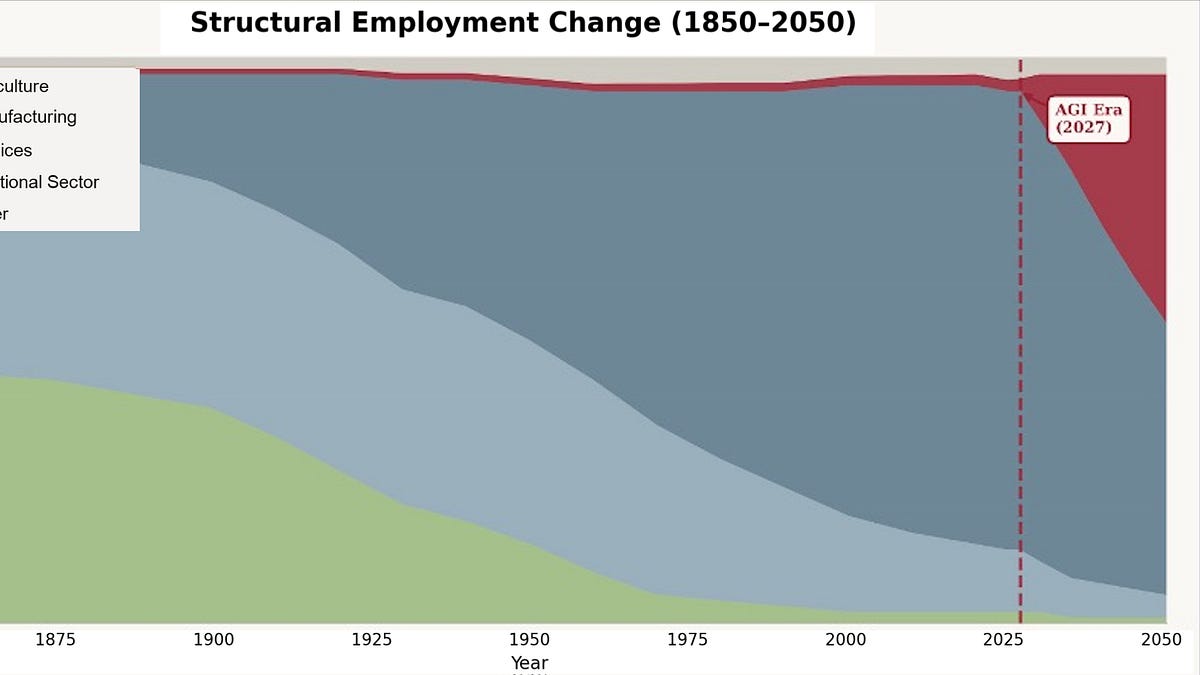
Newspapers struggled to adapt to the internet, but with the right approach, they learned how to survive and then thrive. The upside was global distribution.
Newspapers struggled to adapt to mobile, but with the right approach, they learned how to survive and thrive. The upside was being in everyone’s pocket.
Newspapers will struggle to adapt to the AI era. Jobs will transition, but with the right approach, they will survive and thrive. The upside is that everyone now has a fully staffed newsroom in their pocket.
What will you do with it?
Mark Riley, CEO Mathison AI
AI and Journalism
This week’s best articles, as chosen by our editors

Global AI challenge to transform investigative journalism Northwestern University's Generative AI + Journalism Initiative is launching a contest from May 15 to July 15, inviting teams to develop AI tools that analyze U.S. lobbying disclosures and congressional press releases, aiming to enhance investigative journalism by uncovering leads and patterns. Top teams will compete for cash prizes and present their findings at the 2026 Computation + Journalism Symposium, promoting collaboration and replicable workflows in journalism. |
Editor’s Notebook: Our work is produced by real journalists, not AI bots The Kentucky Lantern has pledged to refrain from using artificial intelligence in its journalistic practices, prioritizing human oversight to ensure accuracy and ethical reporting. This decision reflects a growing trend in the media industry concerned about misinformation and the need for trust and transparency with audiences. |

Human Stories, AI and the Future of Journalism Pacific Sun | Marin County, California - May 12, 2026 As journalism adapts to the digital age with platforms like Instagram and TikTok, concerns arise about the potential loss of genuine human connection amid AI advancements. Despite these changes, the author remains optimistic that the essence of storytelling and the unique human perspective will always be essential in the field. |

Teaching journalism in the AI era Editor and Publisher - May 14, 2026 In a thoughtful reflection, the author warns against the over-reliance on AI in journalism education, arguing that it stifles the development of personal voice and writing skills essential for true storytelling. By emphasizing the importance of originality and critical analysis, they advocate for a hands-on approach to learning that fosters independent mastery and nuanced reporting. |

Joint White Paper Plots Sustainable Path for AI, Cloudflare, and the Future of Independent Journalism — Open Markets Institute Open Markets Institute - May 13, 2026 The Center for Journalism and Liberty's new white paper, “AI and the Future of Independent Journalism,” highlights the dangers AI poses to independent news organizations, urging stronger antitrust enforcement and accountability measures to prevent power concentration among tech platforms. It calls for innovative solutions like machine-readable consent signals and rights-based licensing to protect journalistic integrity amidst evolving AI challenges. |
New Poynter hub serves journalists working with AI and audiences trying to make sense of it Poynter - Poynter.org is dedicated to enhancing the understanding and ethical application of artificial intelligence in journalism, offering training and media literacy initiatives. Their efforts aim to equip journalists and audiences with the necessary knowledge to navigate AI's evolving role in the media while promoting responsible practices and transparency. |
Announcing the Agentic AI Investigative Journalism Challenge | by Nick Hagar | May, 2026 Northwestern University's Generative AI in the Newsroom Initiative is inviting journalists, developers, and researchers to submit innovative projects that harness generative AI to elevate journalism practices. This challenge seeks to explore AI's potential in areas like content creation and fact-checking, fostering collaboration to enhance news quality and accessibility. |
Journalists rapidly unionize after Pennsylvania newsroom rolls out AI Last week, all seven journalists at the Centre Daily Times in State College, Pennsylvania, sought voluntary recognition for their union, aiming to improve working conditions and ensure fair treatment through collective bargaining. This move reflects a growing trend among media professionals advocating for equitable workplaces and could inspire similar initiatives in other local news organizations. |
Talk to your AI tools the way you'd talk to a colleague.

You don't send a colleague a three-word brief. You explain the context, the constraints, what you've already tried. But typing all that into ChatGPT takes forever — so you don't.
Wispr Flow lets you speak your prompts instead. Talk through your thinking naturally and get clean, paste-ready text. No filler words. No cleanup. Just detailed prompts that actually get you useful answers on the first try.
Millions of users worldwide. Works system-wide on Mac, Windows, and iPhone.

AI and Academic Publishing
This week’s best articles, as chosen by our editors

A key science publishing platform is cracking down on AI slop The Conversation - May 18, 2026 ArXiv has implemented a year-long ban on researchers whose papers contain errors from AI, responding to the rise in low-quality AI-generated submissions that often include fabricated citations. Critics argue that rather than imposing strict penalties, integrating AI tools for quality assurance could enhance research standards and improve peer review processes. |

‘Open season’ on scholars’ rights if Elsevier loses Meta fight Times Higher Education (THE) - May 15, 2026 In an unexpected twist, academics may find themselves siding with Elsevier in its lawsuit against Meta, as a potential victory for Meta could threaten scholars' control over their work's representation. The ongoing legal battle raises crucial questions about copyright, fair use, and the ethical implications of using academic material in commercial AI products. |

AI-generated research papers are overwhelming peer review The Verge - May 15, 2026 The rise of AI-generated academic papers is straining the peer-review process, leading to an influx of low-quality research and raising concerns about the integrity of scientific publishing. As researchers grapple with the challenges posed by "paper mills" and misleading studies, there is a growing call for reevaluating research priorities to focus on meaningful contributions rather than mere publication counts. |

Publishing Students Work with Industry Pros on AI Guidance Emerson Today - May 15, 2026 Emerson College students, guided by Professor Sarah Cole, are exploring the role of artificial intelligence in publishing for the Book Industry Study Group, focusing on its ethical implications, sustainability, and job impacts. Through hands-on activities and discussions, they aim to provide clear insights and develop personal AI policies that reflect their values in an evolving industry landscape. |
This newsletter was partly curated and summarised by AI agents, who can make mistakes. Check all important information. For any issues or inaccuracies, please notify us here
View our AI Ethics Policy
